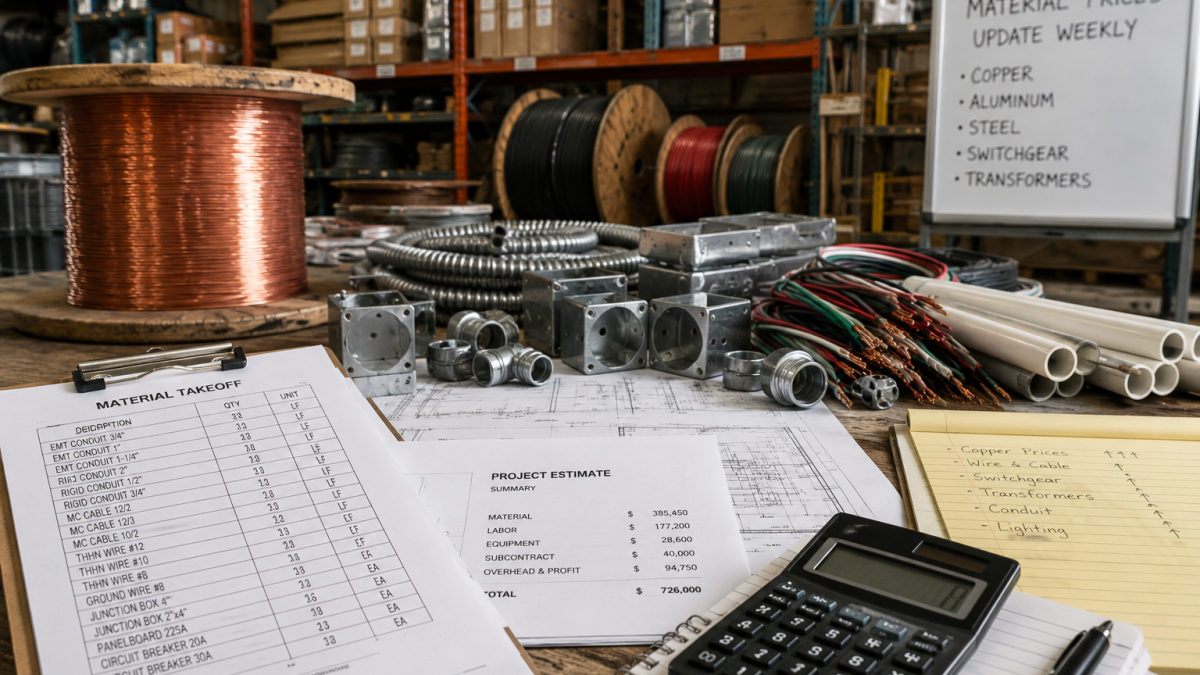

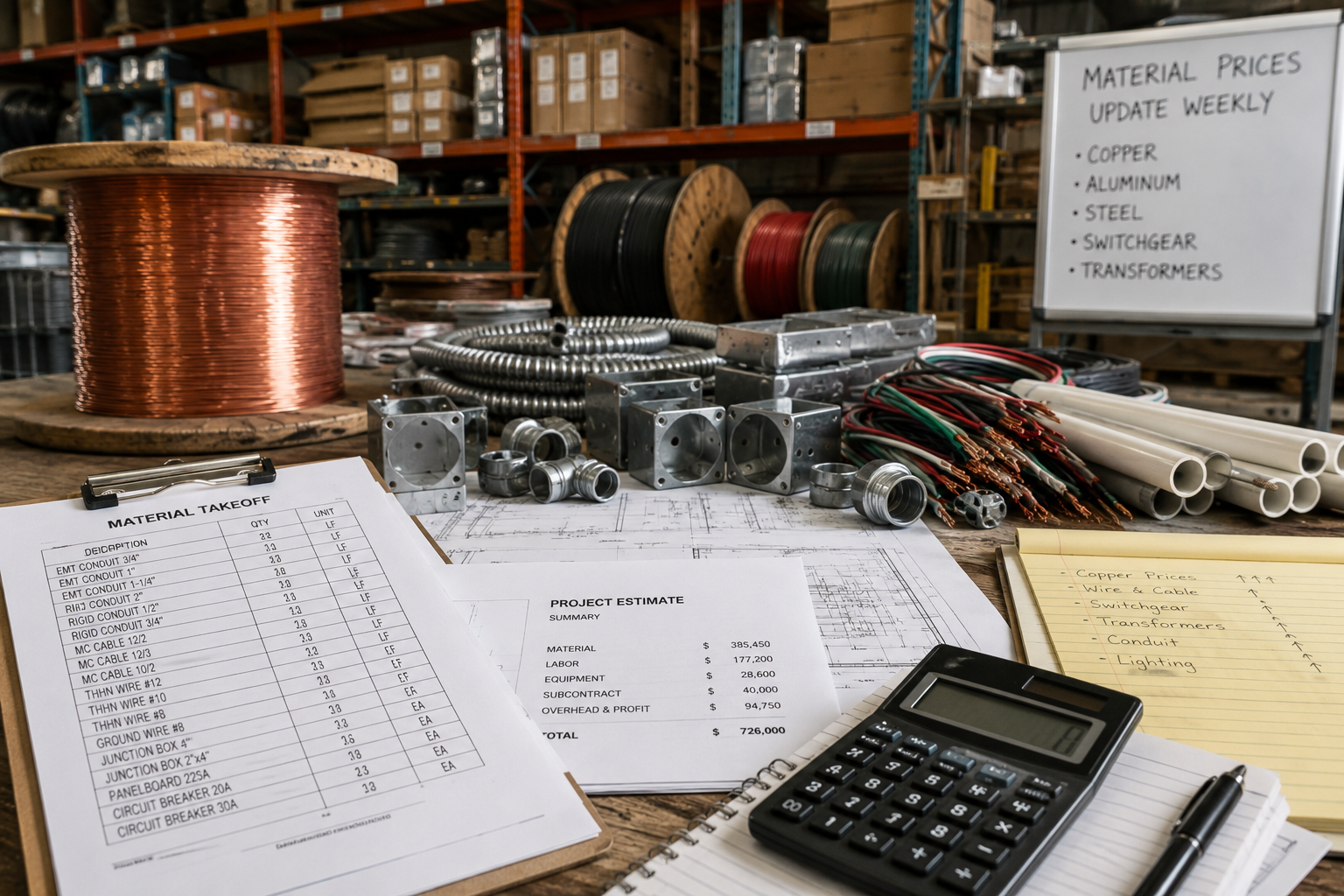
Accurate estimating has always been one of the most important factors in the success of an electrical contractor. In today’s construction market, however, preparing a competitive and profitable estimate has become more challenging than ever. Material prices continue to fluctuate across several major electrical product categories, forcing estimators to monitor costs closely while managing the financial risks associated with long project schedules.
Although inflation has moderated compared to the sharp increases experienced in recent years, pricing uncertainty remains a significant concern throughout the electrical construction industry. Copper, aluminum, transformers, switchgear, cable, conduit, and electrical distribution equipment continue experiencing varying levels of price volatility, long lead times, and regional supply differences. Industry organizations, manufacturers, and construction economists continue advising contractors to carefully manage pricing assumptions throughout the bidding process.
Copper Remains the Biggest Cost Variable
Few materials have a greater impact on an electrical estimate than copper.
Nearly every commercial and industrial electrical project depends on copper conductors, grounding systems, busbars, transformers, and equipment connections. Because copper is traded globally as a commodity, prices can change quickly based on worldwide demand, mining production, manufacturing activity, and international trade.
The continued expansion of AI data centers, electric vehicles, renewable energy projects, battery manufacturing, and utility upgrades has increased global demand for copper. Even modest changes in commodity pricing can significantly affect the total value of large electrical projects.
For electrical estimators, monitoring copper trends has become a routine part of preparing accurate bids. Many firms now update supplier pricing immediately before bid day to minimize exposure to sudden market changes.
Long Lead Times Affect Project Planning
Pricing is only one part of the challenge.
Many electrical products continue experiencing extended manufacturing lead times, particularly large power distribution equipment.
Items commonly affected include:
- Switchgear
- Transformers
- Motor control centers
- Automatic transfer switches
- Busway systems
- Custom electrical equipment
Although availability has improved compared to previous years, contractors continue planning procurement much earlier in the project lifecycle. Delays in receiving critical equipment can affect construction schedules, labor planning, and project profitability.
Project managers and estimators now work more closely than ever to identify long-lead materials during the bidding phase.
Estimators Are Adapting Their Bid Strategies
Material price uncertainty has changed the way many contractors prepare estimates.
Rather than assuming prices will remain stable, estimators increasingly rely on current supplier quotations and maintain frequent communication with distributors leading up to bid day.
Many contractors have also shortened the validity period of their proposals. Instead of guaranteeing prices for several months, bids may remain valid for only 15 to 30 days unless otherwise specified.
Other companies include carefully written escalation clauses on negotiated projects, allowing material price adjustments if significant cost increases occur before procurement.
These practices help reduce financial risk while maintaining transparency with owners and general contractors.
Supplier Relationships Matter More Than Ever
One of the most valuable assets an estimator can have is a strong relationship with electrical distributors.
Reliable suppliers provide:
- Current material pricing
- Lead-time updates
- Product substitutions
- Manufacturer recommendations
- Budget pricing assistance
- Inventory availability
Regular communication allows contractors to identify potential issues before bids are submitted.
Many successful estimators request updated quotations several times before bid deadlines, particularly on large commercial and industrial projects where material costs represent a significant percentage of the overall estimate.
Technology Improves Cost Accuracy
Modern estimating software has helped contractors respond more quickly to changing material costs.
Many estimating platforms now integrate supplier databases, allowing estimators to update pricing more efficiently than in the past.
Cloud-based estimating systems, digital takeoffs, and AI-assisted quantity verification also help improve accuracy while reducing manual data entry.
Although software provides valuable tools, experienced estimators still play the most important role. Understanding market conditions, evaluating supplier quotes, and recognizing pricing risks require professional judgment that cannot be fully automated.
Technology enhances estimating—it does not replace experience.
Owners Are Becoming More Flexible
Project owners have also adapted to today’s pricing environment.
Many negotiated projects now include early procurement strategies that allow contractors to purchase critical equipment before construction begins. This approach helps secure pricing while reducing the risk of future increases.
Some owners are also accepting approved equipment substitutions when equivalent products offer shorter lead times or better availability.
Greater collaboration between owners, contractors, engineers, and suppliers has become increasingly important as projects grow larger and more technically demanding.
What This Means for Electrical Contractors
Successful contractors understand that estimating is no longer simply calculating quantities and applying unit prices.
Today’s estimators must evaluate commodity markets, supply chains, procurement schedules, labor availability, and project risk simultaneously. Companies that actively monitor pricing trends, maintain strong supplier relationships, and communicate openly with customers are better positioned to protect both profitability and client confidence.