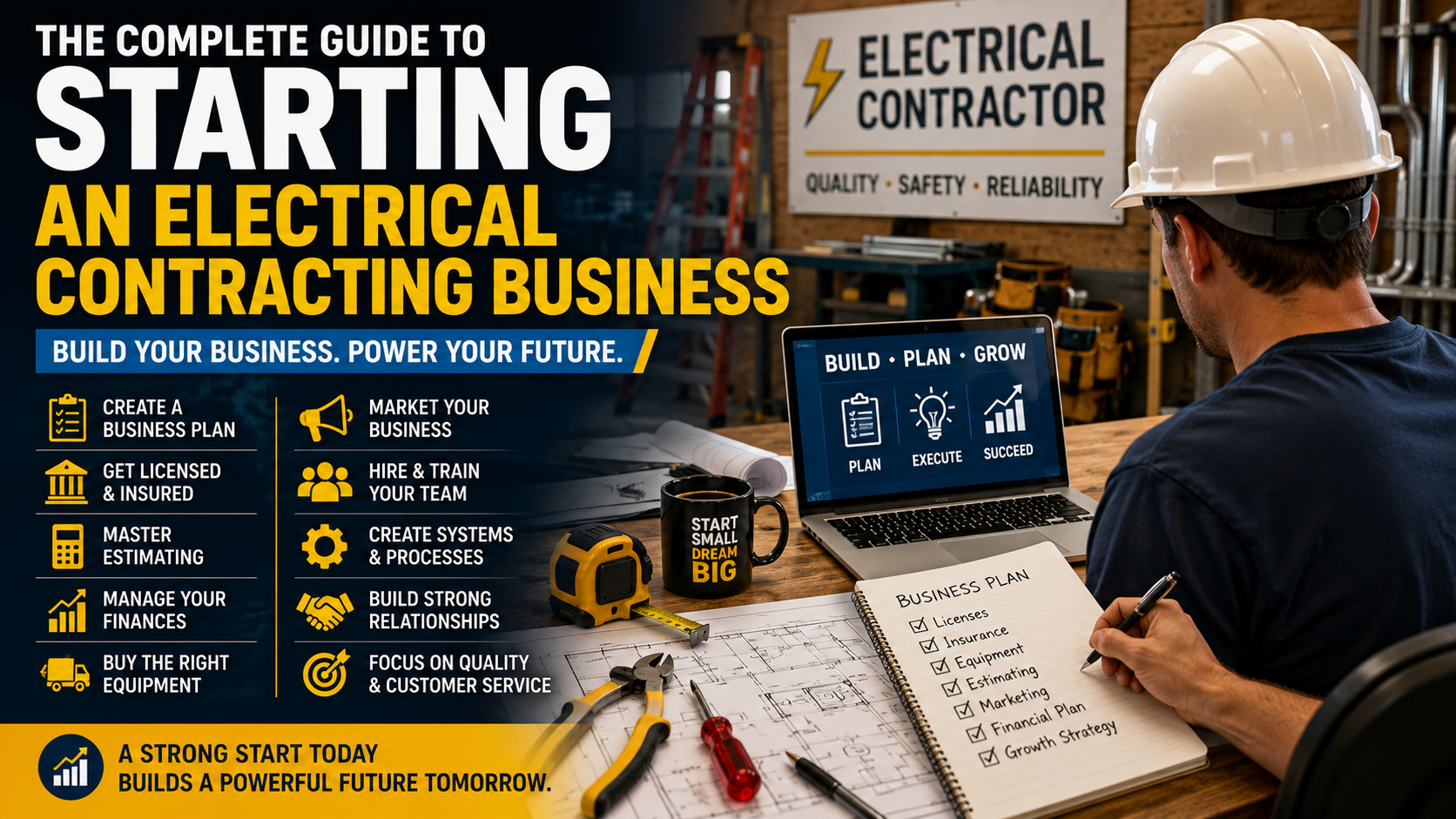
Starting your own electrical contracting business is one of the most rewarding decisions an electrician can make. It gives you the opportunity to control your future, choose the projects you want to pursue, and build a company that reflects your values and expertise. However, success requires much more than technical knowledge. Running a profitable electrical contracting company means understanding estimating, finance, marketing, project management, customer service, and business operations.
Whether you plan to focus on residential service work, commercial construction, industrial facilities, or design-build projects, the principles of building a successful company remain the same. This guide outlines the essential steps every new electrical contractor should take before opening the doors.
Develop a Business Plan
Every successful business starts with a plan. A business plan serves as your roadmap and helps you make informed decisions as your company grows.
Your plan should answer several important questions:
- What types of electrical work will you specialize in?
- Who are your target customers?
- What geographic area will you serve?
- How much startup capital do you need?
- What are your projected expenses and revenue?
- How will you market your business?
A written business plan also becomes valuable if you need financing or plan to bring on partners or investors in the future.
Choose the Right Business Structure
Before accepting your first project, decide how your business will be organized.
Common business structures include:
- Sole Proprietorship
- Limited Liability Company (LLC)
- S Corporation
- C Corporation
- Partnership
Many contractors choose an LLC because it provides liability protection while offering operational flexibility. However, every business is unique, so consult with an attorney and accountant before making your final decision.
Obtain the Required Licenses
Electrical contractor licensing requirements vary by state and, in some areas, by local municipality.
Depending on where you operate, you may need:
- An electrical contractor license
- A master electrician license
- Business registration
- Local permits
- Continuing education
- License renewals
Operating without proper licensing can result in penalties, delays, and lost business opportunities. Always verify current requirements through your state’s licensing authority before beginning operations.
Secure Insurance and Bonding
Insurance protects both your business and your customers.
Most electrical contractors should carry:
- General liability insurance
- Commercial auto insurance
- Workers’ compensation insurance
- Commercial property insurance
- Professional liability insurance when appropriate
Some commercial and government projects also require surety bonds before you can bid on the work. Speak with an insurance professional who specializes in construction businesses to ensure you have adequate coverage.
Invest in Professional Estimating
Estimating is one of the most important skills an electrical contractor can develop.
A profitable estimate should include:
- Material costs
- Labor costs
- Equipment
- Subcontractors
- Permits
- Overhead
- Profit
- Risk factors
Many successful contractors use estimating software such as Accubid or digital takeoff platforms to improve accuracy and efficiency. The goal is not simply to win bids but to win profitable work.
Build Your Financial Systems
Strong financial management separates successful contractors from those who struggle.
From the beginning, establish systems for:
- Bookkeeping
- Payroll
- Job costing
- Accounts receivable
- Accounts payable
- Budgeting
- Tax reporting
Work with an accountant familiar with construction businesses to ensure your financial records remain accurate and compliant.
Purchase the Right Equipment
Every new contractor wants a fully equipped fleet, but overspending during the first year can create unnecessary financial pressure.
Start with equipment that directly supports your current workload, including:
- Service vehicle
- Essential power tools
- Ladders
- Safety equipment
- Testing instruments
- Office computer
- Printer and scanner
As your revenue grows, continue investing in equipment that improves productivity and expands your capabilities.
Develop a Marketing Strategy
Outstanding electrical work alone will not generate enough business.
Customers need to know who you are before they can hire you.
Your marketing plan should include:
- A professional website
- Google Business Profile
- Customer reviews
- Search engine optimization (SEO)
- LinkedIn networking
- Social media
- Email marketing
- Local business networking
Consistent marketing creates a steady pipeline of new opportunities rather than relying entirely on referrals.
Build Relationships
Construction remains a relationship-driven industry.
Spend time developing connections with:
- General contractors
- Architects
- Engineers
- Facility managers
- Property managers
- Developers
- Suppliers
- Inspectors
Professional relationships often lead to repeat customers, negotiated projects, and valuable referrals.
Hire Carefully
Your employees represent your company every day on every jobsite.
Look for individuals who demonstrate:
- Strong technical skills
- Professionalism
- Reliability
- Communication skills
- Positive attitudes
- Commitment to safety
As your company grows, continue investing in employee training, leadership development, and continuing education.
Create Standard Operating Procedures
Documenting your business processes helps maintain consistency and quality.
Develop procedures for:
- Estimating
- Project startup
- Material purchasing
- Scheduling
- Safety
- Customer communication
- Change orders
- Project closeout
Written procedures make it easier to train employees and scale your business over time.
Deliver Outstanding Customer Service
Technical expertise earns projects, but customer service builds long-term success.
Respond quickly to calls and emails. Communicate clearly throughout every project. Finish work on schedule whenever possible. Resolve problems professionally and stand behind your workmanship.
Satisfied customers often become your most valuable marketing resource through referrals and positive online reviews.
Plan for Growth
Many contractors spend all of their time working in the business instead of working on the business.
Set annual goals for:
- Revenue
- Profitability
- Hiring
- Marketing
- Training
- Equipment
- Geographic expansion
Review your progress regularly and adjust your strategy as market conditions change.
Final Thoughts
Starting an electrical contracting business requires determination, planning, and a willingness to learn new skills beyond the trade itself. While technical expertise provides the foundation, long-term success depends on accurate estimating, disciplined financial management, effective marketing, strong leadership, and exceptional customer service.
After more than four decades in the electrical construction industry, I’ve learned that the most successful contractors never stop improving. They invest in their people, embrace new technology, build lasting relationships, and continually refine their business systems. If you approach your new company with that same mindset, you’ll be well positioned to build a respected, profitable electrical contracting business that serves your customers—and your family—for many years to come.