
Build a Career in Electrical Estimating
Complete 3-Course Program — Lifetime Access $2,995
Build a Career in Electrical Estimating
One enrollment gives you lifetime access to all three iBidElectric electrical estimating courses and their course materials. Start with the fundamentals, advance into complex estimating and then develop the design-build and preconstruction skills used at the highest levels of the estimating profession.
The program is designed to help you progress from Junior Estimator to Senior Estimator to Chief Estimator while learning at your own pace.
- Lifetime access to Basic Electrical Estimating
- Lifetime access to Advanced Electrical Estimating
- Lifetime access to Design-Build Electrical Estimating
- Lifetime access to course materials and project files
- Course and lesson progress tracking
- Instructor questions and feedback for each lesson
- Private lesson notes saved to your account
- Learn online and advance at your own pace
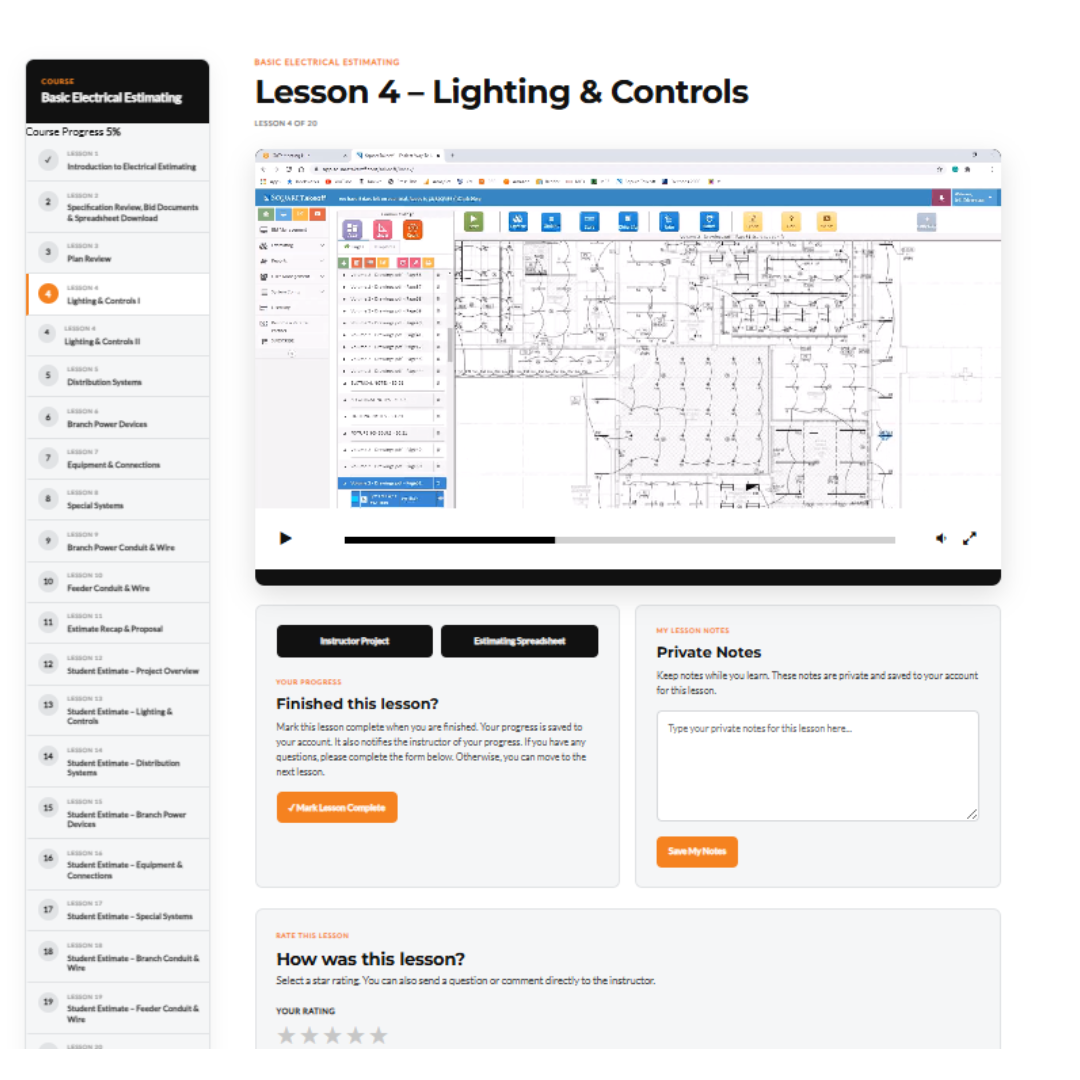
Your online classroom keeps lessons, progress, private notes and instructor feedback together in one place.
Prepare a Complete Estimate Inside the Online Classroom
Every course concludes with a real-world estimating examination. No separate estimating or takeoff software is required.
iBidElectric Takeoff
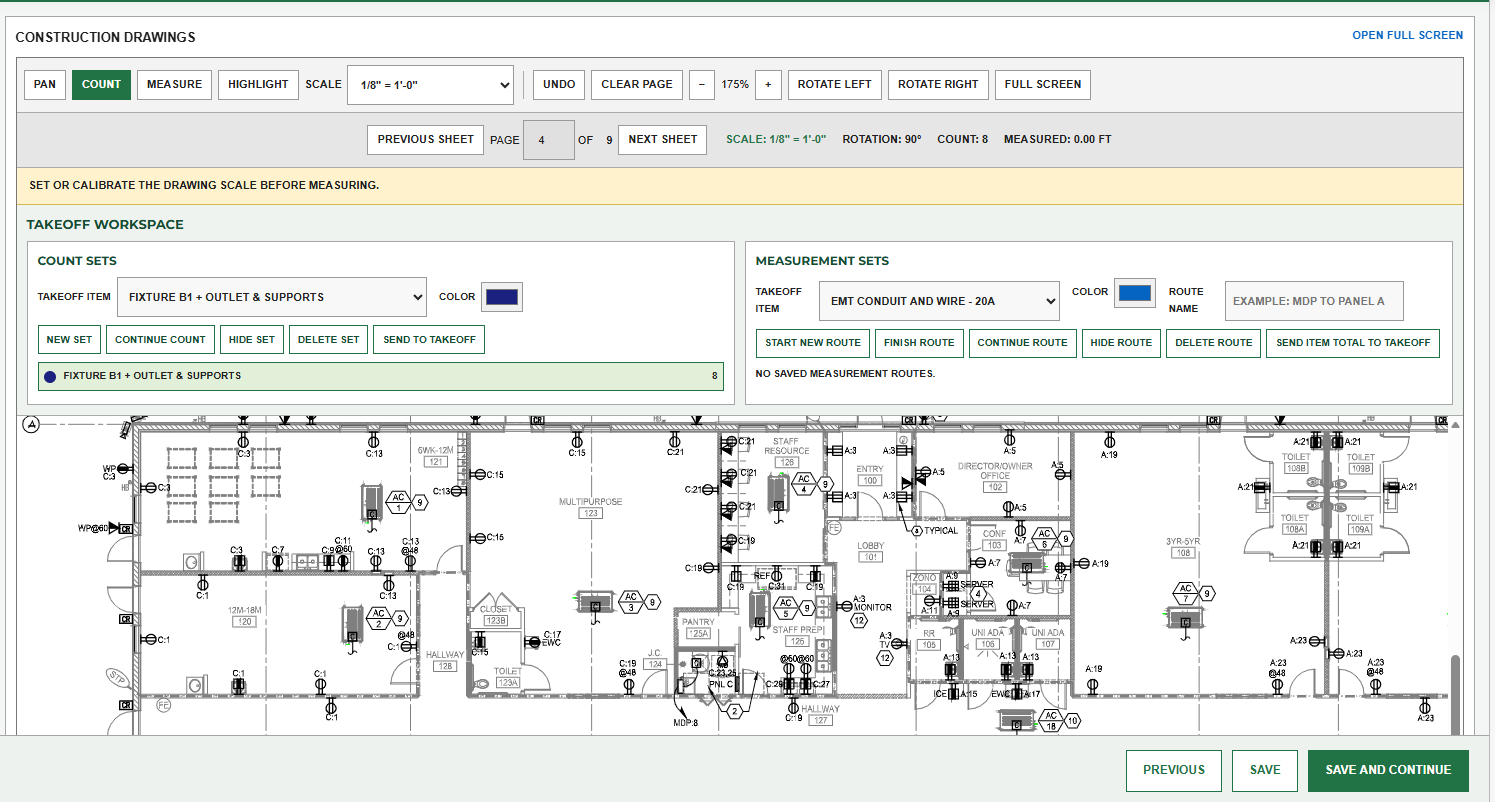
The Drawings, Takeoff Tools and Estimating Workspace Are Built In.
Students complete the work inside the iBidElectric Online Classroom, using the same guided process from drawing review through final price.
- Review construction drawings in the built-in plan viewer
- Count fixtures and devices with saved, color-coded count sets
- Measure conduit and feeder routes directly from the drawings
- Add rises, drops, vertical allowances and waste factors
- Complete material, labor, equipment, job expenses and markups
- Save progress and return to the estimate at any time
- Submit the completed estimate for grading and certification
Basic Electrical Estimating
Start with the foundation. Basic Electrical Estimating teaches the complete estimating process and helps you understand how an electrical project moves from drawings and specifications to a finished bid.
Learn how to approach an electrical estimate systematically instead of simply counting material. The course focuses on understanding the project, organizing the estimate and recognizing the complete electrical scope of work.
Build Your Estimating Foundation
- Reading electrical drawings and bid documents
- Reviewing project specifications
- Understanding the electrical scope of work
- Organizing an electrical estimate
- Performing electrical quantity takeoffs
- Understanding labor units
- Developing labor extensions
From Takeoff to Final Bid
- Material pricing and extensions
- Vendor and equipment quotations
- Subcontractor pricing
- Job expenses and indirect costs
- Labor productivity considerations
- Estimate review procedures
- Developing the final selling price
New estimators, electricians moving into estimating, project managers, electrical contractors and anyone who wants a strong understanding of the complete electrical estimating process.
Advanced Electrical Estimating
Advanced Electrical Estimating moves beyond the mechanics of takeoff and pricing. The focus shifts toward evaluating complicated projects, adjusting labor for real construction conditions, identifying risk and making the judgment calls that experienced estimators make before submitting a major electrical bid.
Estimate More Complex Projects
Larger projects introduce conditions that cannot always be handled with standard labor units or simple material extensions. Learn to evaluate the factors that can dramatically affect the actual cost of performing the work.
- Advanced labor productivity analysis
- Project-specific labor adjustments
- Schedule and overtime impacts
- Site access and material handling
- Project supervision requirements
- Temporary power and construction requirements
- Complex electrical distribution systems
Develop Better Bid Strategy
Advanced estimating requires judgment. Learn to look beyond the numbers and evaluate scope gaps, project risk, competition, exclusions, qualifications and other factors that can determine whether a project is profitable.
- Identifying scope gaps and hidden requirements
- Evaluating estimating risk
- Comparing supplier and subcontractor quotations
- Analyzing alternates and allowances
- Developing bid qualifications
- Final estimate review and bid-day strategy
- Protecting margin before the bid is submitted
Estimators, senior estimators, project managers and electrical contractors who already understand estimating fundamentals and want to improve their ability to evaluate larger, more complicated and higher-risk projects.
Design-Build Electrical Estimating
Design-build estimating requires a different mindset. Instead of receiving a complete set of electrical drawings, the estimator may need to develop a realistic electrical budget from architectural drawings, preliminary documents, owner requirements or a partially developed design.
Build the Electrical Scope
Learn how to evaluate a project before the electrical design is complete. Determine what systems will likely be required, establish reasonable quantities and develop assumptions that allow the project team to make early cost decisions.
- Reviewing architectural and preliminary documents
- Developing conceptual electrical scope
- Estimating from incomplete drawings
- Electrical service and distribution planning
- Lighting and lighting control concepts
- Branch power and equipment requirements
- Low-voltage and specialty system allowances
Develop Conceptual Budgets
Learn how to develop conceptual costs and continuously refine those budgets as the electrical design progresses.
- Square-foot and system-based budgeting
- Developing realistic system allowances
- Using historical project cost information
- Creating assumptions and clarifications
- Tracking scope as the design develops
- Value engineering and cost alternatives
- Moving from conceptual budget to final estimate
Experienced estimators, preconstruction professionals, electrical contractors and project leaders involved in design-build, design-assist, negotiated work, conceptual estimating and early project budgeting.
Online Electrical Estimating Course for Real Electrical Construction
If you are looking for an electrical estimating course that goes beyond theory, iBidElectric is designed to teach the estimating process as it is used in commercial electrical construction. The program combines basic estimating, advanced estimating and design-build estimating so you can build practical skills from quantity takeoff through final bid review and preconstruction.
This online electrical estimating class is built around the work estimators perform every day: reviewing drawings and specifications, understanding scope, completing takeoffs, applying labor units, developing material pricing, evaluating supplier and subcontractor quotations, accounting for job conditions, reviewing risk and assembling a complete electrical estimate.
Because the classes are online, you can learn electrical estimating on your own schedule while continuing to work in the electrical construction industry. The goal is not simply to teach estimating terminology. It is to help you understand how experienced electrical estimators think through a project and make decisions before a bid is submitted.
What You Learn in the Electrical Estimating Course
The course begins with the estimating fundamentals and then moves into the judgment and preconstruction skills required for larger and more complicated projects.
- Electrical drawings and specifications
- Electrical quantity takeoffs
- Labor units and labor extensions
- Material pricing and equipment quotations
- Subcontractor scope and pricing
- Job expenses and indirect costs
- Labor productivity and project conditions
- Estimate review and bid strategy
- Design-build and conceptual estimating
- Value engineering and preconstruction planning
Who Should Take an Electrical Estimating Class?
The program can support people entering estimating as well as experienced electrical construction professionals who want to strengthen their estimating and preconstruction knowledge.
- Electricians moving into the estimating office
- Junior electrical estimators
- Electrical estimators seeking advanced skills
- Project managers who review or prepare estimates
- Electrical contractors and business owners
- Preconstruction professionals
- Senior and chief estimators
- Professionals involved in design-build projects
Electrical Estimating Training From Takeoff Through Preconstruction
Electrical estimating is more than counting devices and multiplying quantities by labor units. A complete estimate requires an understanding of the project, the drawings, the specifications, the electrical systems, the construction schedule, labor productivity, material and equipment pricing, subcontracted work, job expenses, risk and the contractor's final bid strategy.
iBidElectric's three-course structure is designed to follow that progression. Basic Electrical Estimating establishes the foundation. Advanced Electrical Estimating develops the judgment needed for larger and higher-risk projects. Design-Build Electrical Estimating focuses on conceptual budgeting and estimating when the electrical design is incomplete.
Electrical Estimating Class Questions
Can I learn electrical estimating online?
Yes. iBidElectric's electrical estimating courses are delivered online so you can study on your own schedule. The program covers basic estimating, advanced estimating and design-build electrical estimating.
What does an electrical estimating course teach?
A complete electrical estimating course should cover drawings, specifications, quantity takeoffs, labor units, material pricing, vendor quotations, subcontractor pricing, indirect costs, productivity, estimate review, risk and final bid development. Advanced training can also include conceptual and design-build estimating.
Do I need to be an electrician to take an electrical estimating class?
Field electrical experience can be valuable, but the program is also designed for people developing estimating skills through project management, engineering, preconstruction or other electrical construction roles. The Basic Electrical Estimating course starts with the estimating foundation.
Can an electrician become an electrical estimator?
Yes. Electricians often bring valuable knowledge of installation methods, materials, labor and field conditions into the estimating office. Formal estimating training can help organize that field knowledge into a repeatable estimating process.
What is the difference between basic and advanced electrical estimating?
Basic electrical estimating focuses on understanding the documents, takeoff, labor, material pricing and assembling a complete estimate. Advanced estimating focuses more on productivity, project conditions, risk, scope gaps, quotations, qualifications and bid strategy.
What is design-build electrical estimating?
Design-build estimating involves developing electrical scope and budgets before a complete electrical design is available. Estimators may work from architectural plans, preliminary documents, owner requirements, historical information and system assumptions to develop a realistic conceptual electrical budget.
Do I need electrical estimating software to take the course?
No. The construction drawings, plan viewer, count and measurement tools, estimating spreadsheet, instructions, grading and certificate are built into the iBidElectric Online Classroom. Students only need a web browser to complete the lessons and estimating examinations.
Is this electrical estimating class only for beginners?
No. The program contains three levels. Beginners can start with Basic Electrical Estimating, while experienced estimators can continue into Advanced Electrical Estimating and Design-Build Electrical Estimating.
Build Your Electrical Estimating Skills
Start with the fundamentals, develop advanced estimating judgment and then learn how to estimate projects before the electrical design is complete. Together, these three courses build practical estimating and preconstruction skills that can be applied throughout your career.